A Leap of Faith
The November 2026 Letter

If you've followed me the past few months, then you know I've been trying to write something bigger than the short fiction or poetry on my website.
But I've also faced an old challenge: I can't seem to get past the planning stages of longer work.
This only happens with my personal writing. I'm perfectly fine writing novels with my writing partner.
Last month, I felt I'd finally worked through those issues. I had an idea that was progressing, but the more I wrote it, the more my interest waned. After struggling with it for the first part of the month, I set it aside and stopped writing altogether.
It took me a week or two before I found a new approach—one that's less a plan and more a leap of faith.
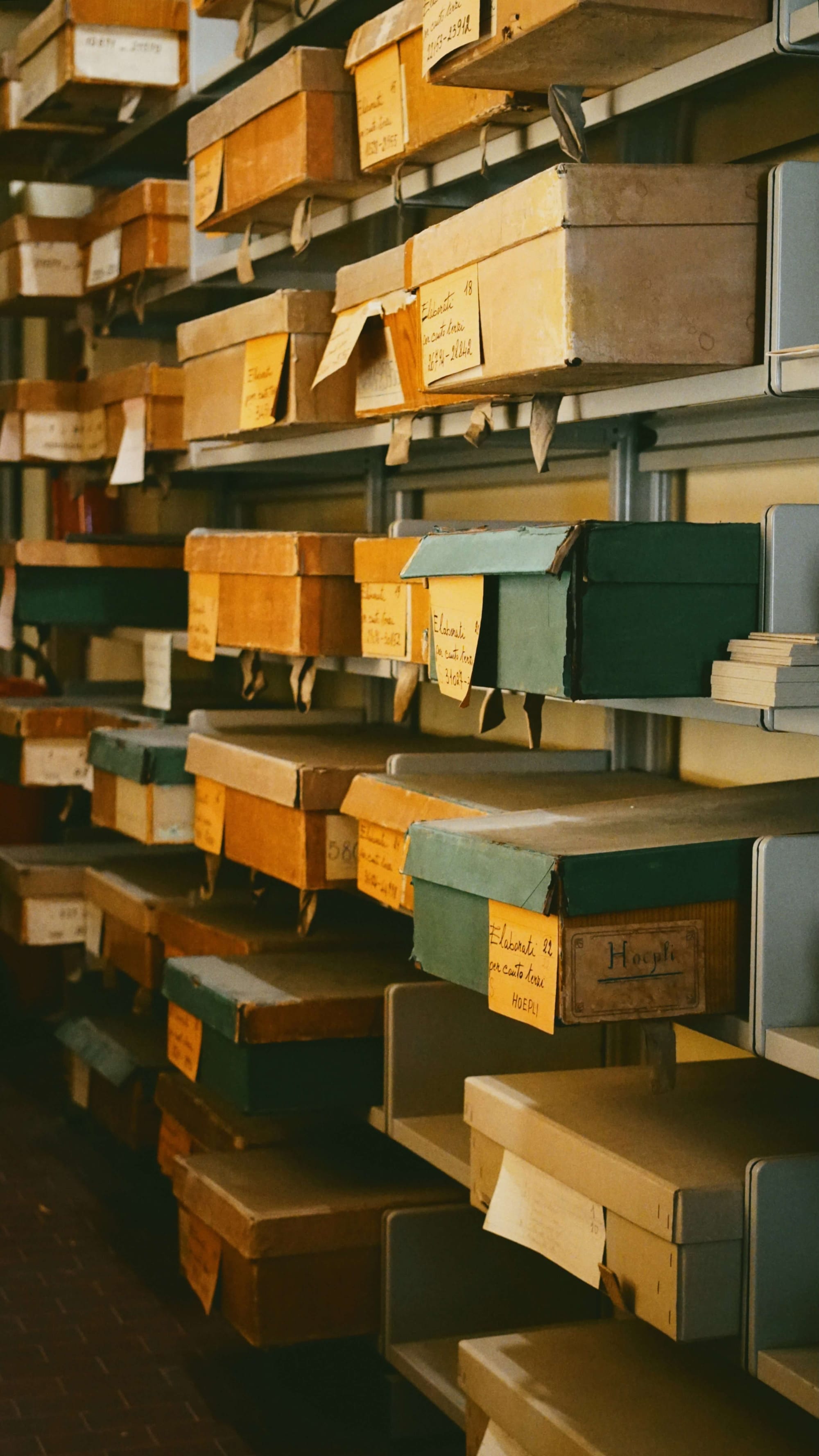
Where the leap began
In my last letter, I mentioned noticing lessons from Jerry Cleaver's Immediate Fiction coming back to me in my work. There were things I'd taught for years but somehow forgotten to apply to myself. So I recently went back to the book to see what else I'd missed.
There I was reminded of the basics: write five minutes a day, every day, then build on it.
After a while, five becomes ten, then ten becomes twenty. The point isn't the amount—it's the doing, showing up every day, even when you don't have a plan or an idea—especially before the doubting begins.
It was a good encouragement to get back to the page.
But as I considered showing up every morning, I wondered how I’d organize all these loose pieces of fiction.
So I did some research. I read about Joan Didion's notebooks full of scraps. John McPhee's index cards. Michael Ondaatje fragments he arranges and rearranges, looking for connections.
And that's when I came up with a practice I call the shoebox.
The shoebox
Here is what I do:
Every morning, I show up and write 300 words.
The number is arbitrary, but I chose it for a few reasons. First, it's about what fits on a printed page. It's also what Seth Godin would aim for in a blog post: the amount that fits on a screen without scrolling down. And it is what a philosopher in Germany, Byung-Chul Han, writes each day for his own work.
I liked the simplicity of it. If you wrote three hundred words a day for 100 days, you'd get about a 30,000-word novella. It seemed the right amount.
In terms of content, it initially is focused on short fiction, but I've also played with some poetry, just to explore imagery and description.
Once it's done, I toss it in the shoebox.
I don't review it, think about it, or edit it. I put it there and forget about it. The next day, I start fresh, exploring whatever interests me in that moment.
Also, to be clear, the shoebox is not literal—it's just a folder on my computer. But I like the image of a box with a lid you shove in a closet or under the bed and don't worry about.
Only after I've forgotten about those scraps do I look at them again.
This may take a month, or two, or more. I wait until I can see it with fresh eyes, so that when I do look, I can see its real energy—whether it's good or bad, or if there's a big idea hiding beneath the surface.
And that's when I start reworking it.
This might mean developing a half-finished story. It might be taking different scraps and seeing if they can be rearranged and assembled. It might be culling the bad stuff.
But it's about discovery, and building off what's inside.
A leap of faith
You've probably noticed—this is still a work in progress.
I've begun filling the shoebox, but I'm still a few months away from looking back inside to find out what's there.
The truth is, none of this process is guaranteed.
I don't know if I will be able to find anything or rewrite anything. This whole thing is a leap of faith—showing up to write each day now and hopefully creating gifts for myself to discover in the future.
So this is where I am. Testing a process that is about not having a process, and not knowing the end until I finally get there. Led by curiosity, mostly, with no real answers.
For now, I show up, write 300 words, and toss it in the shoebox.
Hopefully next month I can tell you where it's led me.
All the best,
David